Vine Leaves Pattern Review for Real Projects
First Impressions: Delicate, Flowing, and Surprisingly Versatile
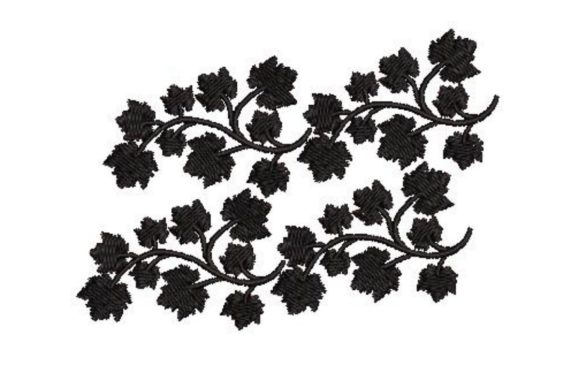
As someone who’s digitized over 300 nature-inspired motifs—and stitched them on everything from linen napkins to organic cotton onesies—the Vine Leaves Pattern caught my eye not for flashiness, but for its quiet confidence. It doesn’t shout; it winds. The line work feels intentional—not overly rigid, not too loose—like a hand-drawn sketch translated thoughtfully into a machine embroidery design. There’s a gentle rhythm in the leaf placement, with subtle variation in size and angle that avoids repetition fatigue. This isn’t just a filler motif; it’s a design with breathing room, which makes it ideal for projects where elegance matters more than impact.
Where Vine Leaves Pattern Naturally Fits
I pulled Vine Leaves Pattern into my workflow while prepping for three real orders: a linen apron for a local bakery, a set of baby blanket corners for a newborn gift bundle, and a limited-run tote bag series for a botanical-themed Etsy shop. In each case, the pattern held up—not as a centerpiece, but as a refined accent. Its strength lies in context: it enhances without overwhelming. On the apron, it traced the curved hem beautifully. On the blanket, it framed the corner with softness and movement. And on the tote, paired with a small monogram, it added texture without competing with the fabric’s natural drape.
Real-World Embroidery Performance
On stable fabrics: Linen, medium-weight cotton, and twill responded beautifully. The stitch density felt balanced—no excessive fill stitching that could stiffen the fabric or cause puckering. I used a medium tear-away stabilizer and standard 40-weight rayon thread, and every leaf held clean edges and smooth satin-stitch transitions.
On stretchy or textured surfaces: I tested it on a lightweight French terry sweatshirt and a brushed cotton pillow cover. With light cutaway stabilizer and reduced top tension, the design stayed true. No skipped stitches or distortion—even across the curved shoulder seam of the sweatshirt. That said, avoid placing the longest vine segment directly over high-stretch seams (like underarm or side seams) unless you’re willing to do a second stabilizer pass.
For dark or dense fabrics: The Vine Leaves Pattern relies on shape and contour rather than heavy fill, so it reads clearly even on navy canvas or charcoal denim. I recommend testing thread color contrast first—especially if using tonal stitching. A slightly lighter or deeper green than your base fabric adds dimension without demanding attention.
On caps and curved surfaces: While not designed as a cap-specific layout, I successfully embroidered a shortened version (just two leaves + stem) on a structured cotton cap using a 4” hoop. The key was repositioning the design to sit within the flat front panel and confirming the file didn’t include tiny interior details that would vanish at that scale.
Practical Considerations for Commercial Use
If you're selling finished items—whether on Etsy, at craft fairs, or through boutique wholesale—you’ll appreciate how Vine Leaves Pattern supports brand consistency. It’s cohesive enough to repeat across product lines (e.g., matching kitchen towels and aprons), yet flexible enough to pair with other motifs like single flowers or minimalist stems. Because it’s categorized under Single Flowers, it’s easy to find alongside complementary designs—but don’t mistake its classification for simplicity. This is an Embroidery file built for integration, not isolation.
For handmade product photography, the pattern adds organic visual interest without clutter. It photographs well in natural light, especially when captured mid-fold or draped—those subtle curves translate beautifully on screen. Customers notice the care in the detail, which builds trust in your craftsmanship. One repeat buyer told me she chose my nursery decor set specifically because “the vines looked hand-placed, not machine-made.” That’s the effect this design delivers when executed well.
What to Check Before You Stitch
- Test on scrap fabric first—especially if working with blends, knits, or new stabilizer combinations.
- Review stitch density visually in your embroidery software. Look for tight clusters where leaves overlap; these may need slight manual adjustment for very delicate fabrics.
- Confirm hoop size compatibility. The full vine layout likely requires at least a 5” x 7” hoop, but shorter segments work in smaller hoops—ideal for patches or cap fronts.
- Compare light/dark fabric mockups before finalizing thread colors. What reads as delicate on ivory may disappear on oatmeal.
- Inspect small details after stitching. Tiny stem tips or leaf veins should be crisp—not frayed or lost in thread buildup.
- Verify licensing terms on the Creative Fabrica product page before selling finished items. Licensing varies by designer, and commercial use permissions are essential for Etsy sellers and small business owners.
Final Thoughts for Designers and Makers
The Vine Leaves Pattern won’t replace your go-to floral bouquet or bold monogram—but it fills a quiet, valuable gap: the need for elegant, nature-based continuity across diverse handmade products. It works equally well as a subtle border on a tea towel, a refined accent on a personalized gift, or a layered element beneath applique in a custom apparel piece. As a digital embroidery file, it’s clean, scalable, and respectful of fabric integrity. As a design asset, it elevates presentation without demanding extra production time.
If you’re building a cohesive collection—say, a spring-themed line for your Etsy shop or a signature look for your boutique merchandise—the Vine Leaves Pattern earns its place not as a standalone star, but as a trusted supporting voice. It’s the kind of embroidery file that makes customers pause, lean in, and say, “I want to know who made this.” And in handmade commerce, that’s the highest compliment of all.